
Improving Construction Site Management with Microsoft Power Apps
Digitise site records, strengthen compliance, and streamline information flow.
Our Customer’s Challenge
A growing construction and civil engineering company faced increasing challenges in maintaining on-site compliance, transferring information efficiently between project sites and the back office, and protecting sensitive operational data. As the number and scale of projects running in parallel increased, its reliance on paper-based records created delays, duplicated administration, limited management visibility, and a greater risk of information being lost, incomplete or inaccessible when needed.
Many operational processes had evolved informally and were not consistently defined or documented. This made it difficult to establish a complete view of how information was captured, approved and transferred, or to ensure that teams followed the same processes across different sites.
The company had already introduced tablets and digital templates using Google applications, but these provided only partial coverage and were difficult to use in locations with unreliable mobile connectivity. They also offered limited control over data quality, workflow consistency and the consolidation of information for management review.
To support continued growth, strengthen compliance and improve collaboration across dispersed teams, the company needed to define and standardise its operational processes before implementing a robust, secure and user-friendly platform for on-site record keeping and information management.
Our solution
In response to these challenges, we led the discovery, design and implementation of a digital operations solution using Microsoft Power Platform.
Process discovery and analysis: We conducted structured workshops with management, office staff and operational stakeholders to understand the company’s existing processes, tools, activities and information flows. Where processes were informal or undocumented, we created current-state process maps and step-by-step task descriptions to establish a shared understanding of how work was being performed.
Future-state process design: We facilitated discussions with the company to define how its operations should work in the future. The agreed processes were documented as clear workflows, responsibilities and operating instructions, providing a foundation for standardisation across project sites.
Requirements definition: We translated the operational findings into a comprehensive set of functional and non-functional requirements. These were reviewed and agreed with the company, ensuring that the solution addressed genuine site and back-office needs rather than simply replicating existing paper forms digitally.
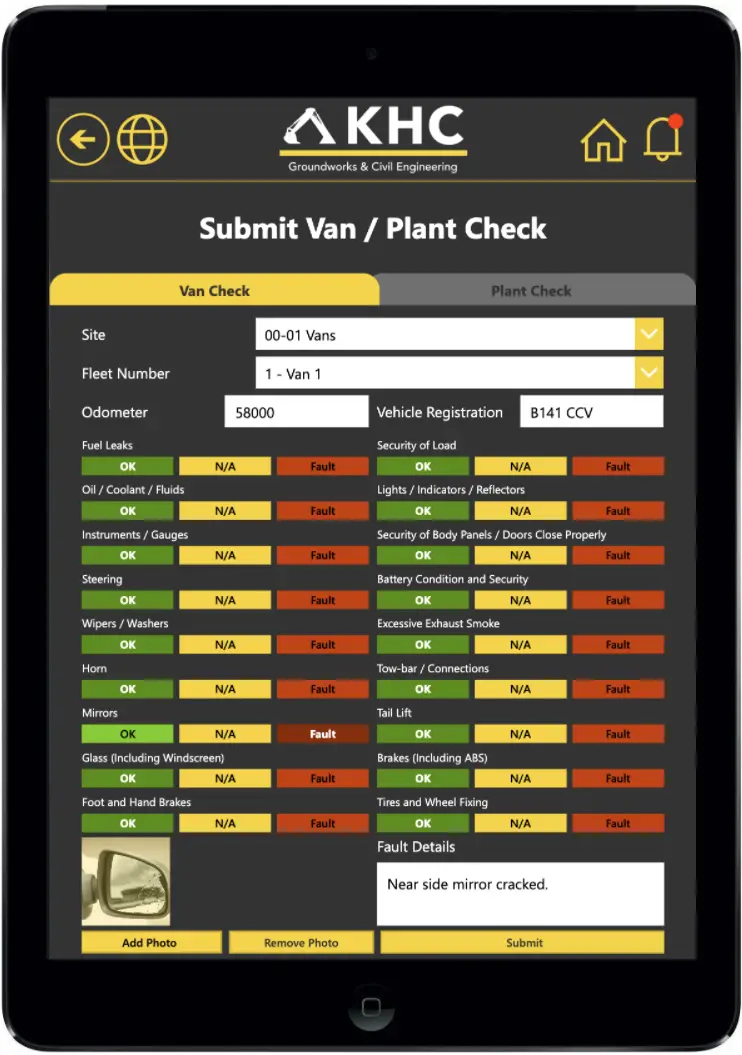
Digital solution implementation: We designed and deployed applications using Microsoft Power Apps, enabling on-site teams to capture and submit records through tablets. Guided forms, mandatory information and structured fields improved the quality and consistency of submitted data, while support for photographic evidence strengthened traceability and compliance.
Workflow automation: Microsoft Power Automate was used to automate the movement, review and approval of information, reducing manual administration and accelerating the transfer of records between sites and the office.
Offline accessibility: The applications were designed to support teams working in locations with limited or unreliable mobile connectivity. Information could be recorded on site and synchronised when connectivity became available.
Secure data architecture: Microsoft Dataverse provided a centralised and secure platform for master data and operational records, supporting controlled access, consolidated reporting and future analysis.
Delivery and testing assurance: We acted as the bridge between operational stakeholders and the development team, translating business needs into clear technical requirements and resolving questions throughout delivery. Requirements were converted into comprehensive test scenarios, providing a structured basis for validating the solution. Jira was used to manage requirements, tasks, decisions and delivery progress.
The Results
- Faster information flow: Key site information that had previously taken weeks to reach the office could be submitted and made available within minutes.
- Standardised records: The company moved away from varied and inconsistent submissions and began receiving approximately 50 timesheets each week in a standardised format.
- Enhanced compliance: Guided digital workflows improved adherence to company processes and ensured that required information and supporting evidence were captured consistently.
- Reduced administration: Automated workflows and centralised records reduced the effort required to process paperwork, rekey information and consolidate data from multiple sites.
- Improved collaboration: Office staff could review, update and act on submitted information promptly, creating a more effective flow of information between operational and back-office teams.
- Greater operational control: Defined processes, agreed requirements and documented workflows gave the company clearer, repeatable ways of working across its projects.
- Improved data security: Moving from distributed paper records and uncontrolled spreadsheets to a managed digital platform strengthened the confidentiality, integrity and availability of operational information.
- Delivery assurance: Documented requirements and comprehensive test scenarios provided a controlled basis for developing, validating and accepting the new system.
- Scalable foundation: Microsoft Power Platform gave the company a flexible foundation that could be extended to support additional forms, workflows, reporting requirements and operational processes as the business continued to grow.
What our Customer says
The digital site management system encompasses the best innovative ideas that will transform how our construction projects are managed. It takes paper out of the process, making systems and workflows accessible to employees wherever they may be. The system automates and streamlines processes, delivering on-site information to the office as it is recorded. It also notifes sites of required actions and updated information, ensuring seamless collaboration.
Kirk Hough, Managing Director, KHC Groundworks
More projects
Brand Update Delivery Management
Coordinating a complex cross-functional rebrand across digital, physical and operational channels; delivered on time and within budget.
Stock Knight: Turning Complex Financial Data into Confident Investment Decisions
We designed and developed Stock Knight, a scalable investment research platform that transforms complex financial data into accessible, decision-ready insights for equities and exchange-traded funds.